Every month starts at zero. You pay $30, $40, $60 to acquire a customer, they buy once, and on the first of next month you are back at the ad account buying the same revenue again. That treadmill is the default setting of one-time e-commerce, and it is why so many stores with healthy top-line revenue have exhausted founders and empty margins.
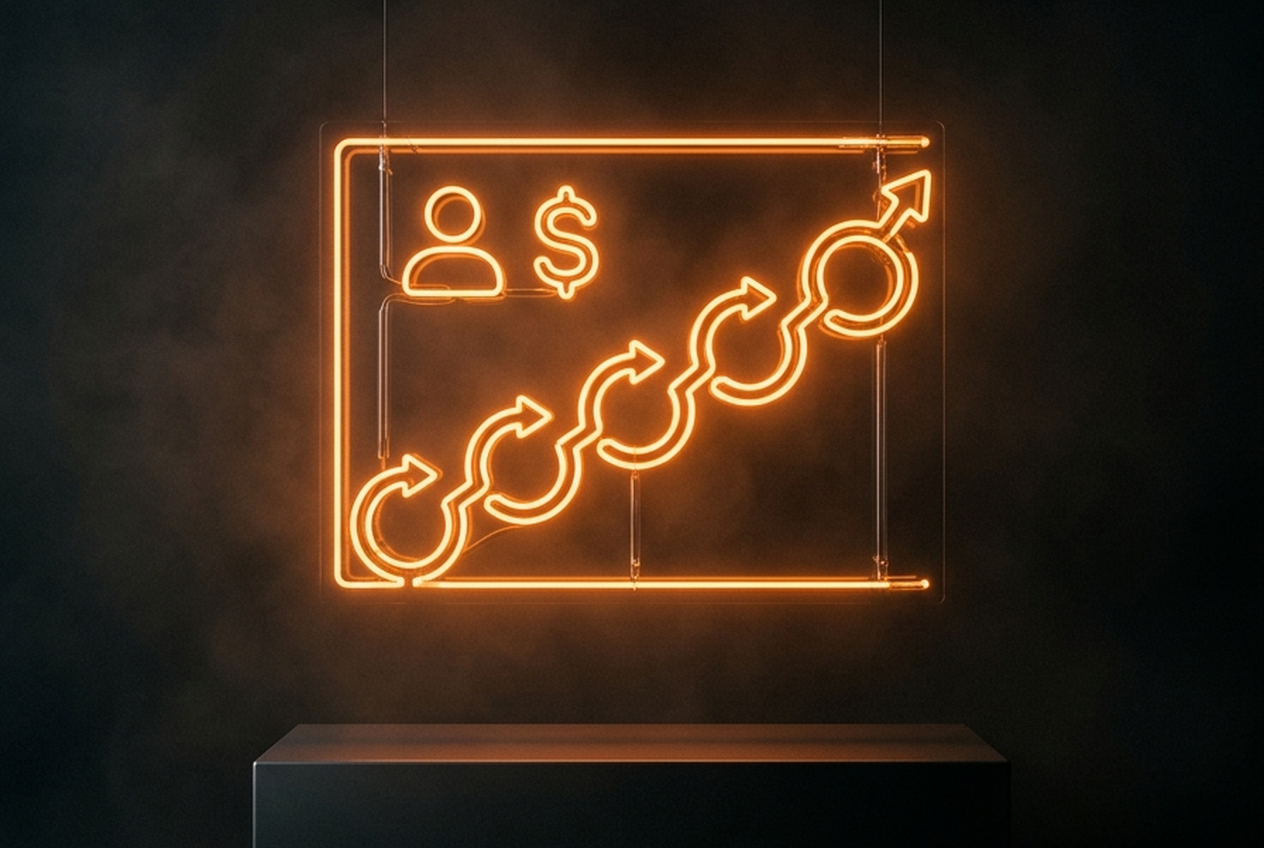
Subscriptions flip the math. Instead of buying the same revenue twelve times a year, you buy it once and collect it monthly. A store with 400 active subscribers paying $35 a month has $14,000 in revenue booked before a single ad runs. That is not a growth hack. That is a different business.
The Recurring Revenue Math
Subscriptions work where consumption is predictable: supplements, coffee, cosmetics, pet food, household essentials. The customer empties the product on a rough schedule, so delivery on that schedule is a service, not a sales trick. If your product is used once and shelved, a subscription is just a discount program with extra steps, and churn will prove it within three cycles.
The standard offer is 10 to 15 percent off plus automated delivery every 30 days. The discount is the bait; the automation is the hook. A one-time buyer with a $52 order and $9 contribution margin is worth $9. The same customer on a six-month average subscription at 15 percent off is worth roughly $46 in contribution, and you paid the acquisition cost once. Lifetime value stops being a projection and becomes a billing schedule.
Run the churn side of the ledger before you celebrate. At 10 percent monthly churn you replace your entire subscriber base roughly every ten months; at 5 percent, every twenty. Every point of churn you remove adds months of collected revenue to customers you already paid to acquire, which is why subscription operators obsess over retention mechanics more than acquisition creative.
The Tech Stack on Shopify
Pick the Subscription Engine
Three proven routes. Shopify's own free Subscriptions app covers simple plans at zero extra cost. Recharge is the heavyweight for larger catalogs, with deep analytics and bundle logic. Bold Subscriptions sits between them with flexible rules. All three run on Shopify's native selling-plan API, so orders, customer accounts, and checkout stay inside one system. Full disclosure: mizostoreforge operates as a Shopify affiliate, and this is exactly why we point founders at the platform: billing, orders, and customer data in one place is worth more than any single feature.
Whichever engine you choose, build in this order: one product, one interval, one discount. Launch that, watch two full billing cycles, and only then add bundles, prepaid plans, or tiered intervals. Every option you add multiplies the edge cases your support inbox has to absorb.
Win the Billing Battle
Recurring revenue dies quietly at the card level. Between 5 and 10 percent of renewal charges fail on expired cards, insufficient funds, or bank fraud filters, and without dunning management that revenue is simply gone. Set your app to retry failed charges on a schedule, day 1, 3, 5 and 7, send a pre-renewal email three days before each charge, and the moment a card is declined, send a one-click update link. Stores that take dunning seriously recover 40 to 70 percent of failed renewals. Stores that do not are churning customers who never decided to leave.
Give Churn a Softer Exit
Cancellation is rarely about the product. It is about the pantry: too much stock at home, a vacation, boredom with the same flavor. Offer pause, skip-a-month, and variant swap options in the customer portal, and put those options in front of anyone who clicks cancel. A paused subscriber is not churned revenue; it is delayed revenue. Track the save rate and you will find that about a third of would-be cancellations convert into a pause or a swap instead.
Make the Operations Match the Promise
A subscription is a promise to have stock every 30 days, which makes inventory discipline non-negotiable: subscribers churn for good when a renewal ships late. Set reorder points for your subscription SKUs using the math from our supply chain guide, and build subscriber growth into the forecast, because your baseline demand now compounds monthly. Watch the fee stack on smaller recurring orders too; our breakdown of hidden cross-border costs bites twice as hard when margins are 15 percent thinner by design.
Retention after the first delivery is where subscriptions are actually won. Refill reminders, loyalty points at the third renewal, a personal insert in the second box: the post-purchase flows from our email marketing guide do more for subscriber lifetime value than any deeper discount ever will.
Stop Chasing, Start Collecting
One-time sales make e-commerce a game of cat and mouse with ad platforms, and the mouse always pays rent. Subscriptions end the chase: revenue arrives on a schedule, forecasting becomes arithmetic, and the ad budget stops funding next month's survival and starts funding actual growth. Start with your most consumable product, add a 10 percent subscribe-and-save option, and watch what a hundred recurring orders do to your stress level.
Frequently Asked Questions
Which products are a bad fit for subscriptions?
Anything consumed once or replaced rarely: furniture, one-off gadgets, seasonal items. Subscriptions need a predictable consumption cycle. If customers never naturally run out, you are selling a discount, not a service.
How much should a subscribe-and-save discount be?
Ten to fifteen percent is the proven band. Below 10 the incentive is too weak to change behavior; above 15 you are buying revenue with margin. If you need more pull, add free shipping on renewals instead of a deeper cut.
What is a healthy churn rate for a physical product subscription?
Monthly churn of 6 to 10 percent is normal in the first year. Above that, check delivery reliability, product fit, and whether customers can pause or swap instead of canceling. Well below 5 usually means only superfans are signing up, and growth will stall.