Your email list is the only marketing channel you actually own. Meta and Google rent you attention and raise the price every quarter. An email costs effectively nothing to send, reaches people who already raised their hand, and keeps working long after the ad budget runs dry.
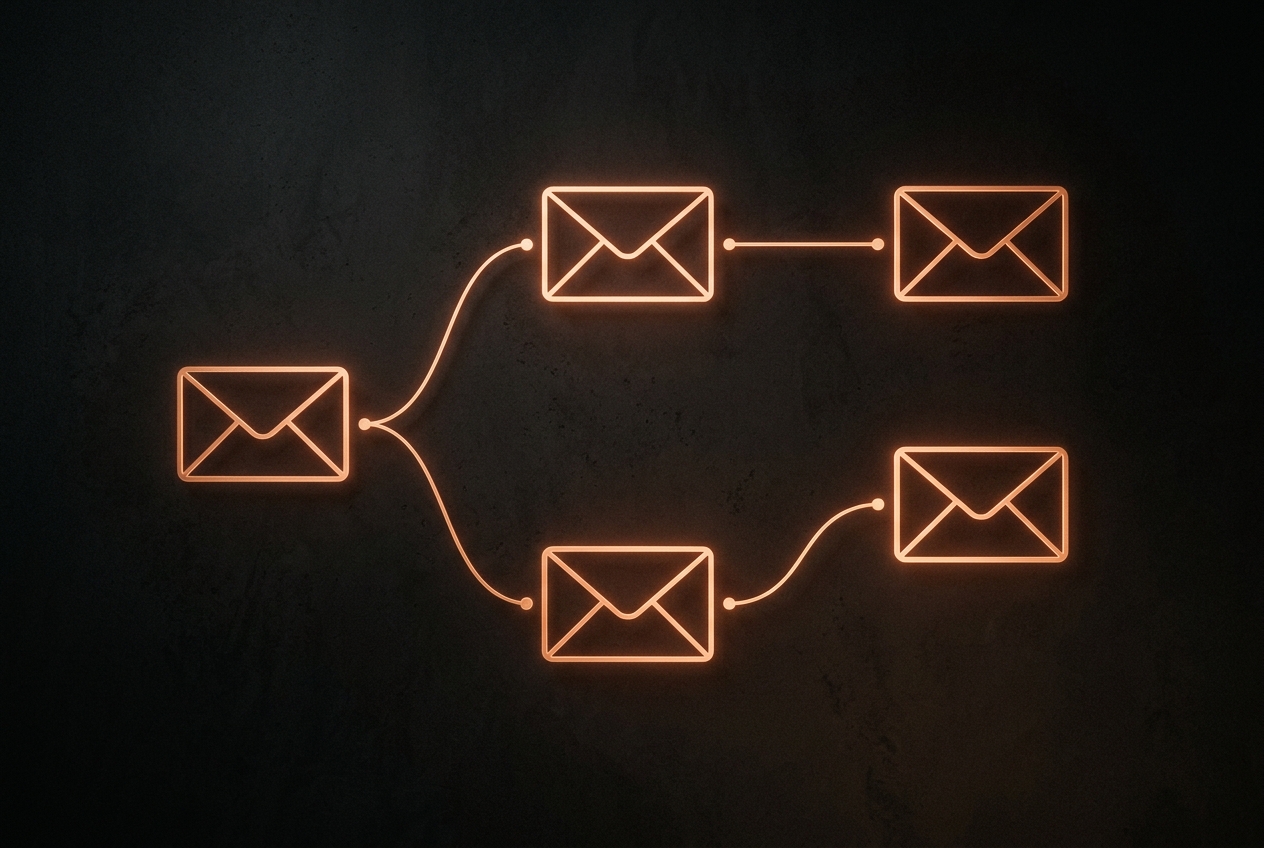
There are two kinds of email. Campaigns are the manual one-off blasts you send to everyone (a launch, a sale, a newsletter). Flows are automated sequences triggered by a specific behaviour, and they run 24/7 without you touching them. Campaigns are optional. The four flows below are the ones that quietly make or lose you money every single day.
Flow #1: The Welcome Series
Trigger: a new subscriber joins through your pop-up or footer form. Goal: convert high-intent interest into a first order while attention is at its peak, which is the first hour, not next week.
The Sequence
- Email 1 (immediate): deliver the promised code or lead magnet instantly, with a one-line brand intro and a clear button to shop. If you promised '10 percent off', the code must be in this email, above the fold, no hunting.
- Email 2 (24 hours later): tell your origin story or what actually makes the product different. People buy from brands they understand, so sell the why, not just the what.
- Email 3 (48 hours later): show your bestseller with real customer quotes and reviews next to it. Borrow the trust you built in our social proof guide and let other buyers do the convincing.
A sign-up discount is a straightforward promotion to the subscriber, so no endorsement disclosure is needed there. That changes the moment you ask customers to post about you in exchange for a reward, which is covered in Flow #3.
Flow #2: Abandoned Checkout
Trigger: a visitor adds to cart, starts checkout, enters their email, then leaves before paying. Goal: recover an undecided shopper without erasing your margin with an instant discount.
The Sequence
- Email 1 (1 to 2 hours after abandonment): a soft reminder showing the exact items left behind, with a direct link back to the checkout. No discount yet. Many people simply got distracted.
- Email 2 (24 hours later): handle the real objections. Restate shipping cost and delivery time, your return policy, and a trust badge or two. Most abandonment is doubt, not price.
- Email 3 (48 hours later): the final call with light urgency ('your cart is about to expire') and, only if you must, a small incentive. Save the discount for last so you do not train shoppers to abandon on purpose.
Flow #3: Post-Purchase Sequence
Trigger: an order is placed. Goal: build confidence, cut 'where is my order' support tickets, and grow lifetime value. This is where retention actually happens, and it is expanded in our post-purchase playbook.
The Sequence
- Email 1 (immediate): a clear transactional confirmation with a genuine thank-you and a realistic delivery window. Reassurance, not a sales pitch.
- Email 2 (on delivery, around day 3 to 5): usage tips, care instructions, or a short setup guide so the product gets used well. A customer who succeeds with the product keeps it and comes back.
- Email 3 (day 7 to 14): ask for an honest review or a photo (UGC), with an optional cross-sell of a complementary item. FTC rule you cannot skip: if you offer any incentive for the review (a discount, free product, or gift), the review must clearly and conspicuously disclose it, for example a visible line like 'I received a discount for this review', placed above the fold before the review text. Always ask for honest feedback regardless of star rating.
Flow #4: Win-Back Sequence
Trigger: no purchase recorded in 60, 90, or 120 days (pick the window that matches your buying cycle). Goal: re-engage a lapsed buyer before they forget you exist.
The Sequence
- Email 1: a 'we miss you' angle that leads with new arrivals or genuine improvements since their last visit. Give them a reason to look again before you give them a discount.
- Email 2: an exclusive, time-limited return offer for existing customers only. Frame it as a loyalty perk, not a fire sale, so you protect both margin and brand.
Implementation and Tech Stack
You have two realistic paths. Shopify Email is native, cheap, and fine for a store just starting out, but its automation is basic. Klaviyo is the standard for serious flows, with deep Shopify data, segmentation, and prebuilt versions of all four flows above. Omnisend is a lighter, lower-cost middle ground that bundles email and SMS. Start on Shopify Email if budget is tight, and move to Klaviyo or Omnisend the moment flows become your main revenue driver.
Pre-Launch Checklist
- Authenticate your sending domain: set up SPF, DKIM, and DMARC so your emails land in the inbox, not spam. This is the single biggest deliverability lever.
- Test on mobile first: most opens are on a phone. Check that buttons are tappable and nothing is cut off before you go live.
- Add UTM tracking: tag every link so revenue from flows shows up correctly in Shopify and Google Analytics.
- Send yourself through each flow: place a real test order and a real abandoned cart, and confirm every email fires with the right timing and working links.
- Set exit conditions: make sure a shopper who buys is removed from the abandoned-cart flow, so nobody gets nagged for a purchase they already completed.